

Homeland insecurity
My take on DHS from being in the room when it happened

It has been a challenge lately to write about current events because of the turmoil in my own life. I imagine I’m not alone in this; we're all living through an extraordinary time in world history, yet we still have our individual lives to navigate.
I have been dealing with two significant challenges: a sudden and unfamiliar chronic illness, and the profound grief of losing several loved ones in a short period, including half of my immediate family within just 14 and a half months. These events have taken up most of my time and energy. With one exception, my writing over the past few months has focused on my personal struggles and what they have taught me about God's purpose and character. If you are in a season of illness or loss, I encourage you to check out my “dispatches,” as I call many of them, and see whether anything in them can help.
As we reach the end of January 2026, it's clear that the turmoil of 2025 under the Trump administration is just the beginning. The start of this new year has already brought us confrontation and death in the streets of Minneapolis as Immigration and Customs Enforcement (ICE) and the Customs and Border Patrol (CBP) invade an American city; military intervention in Venezuela and the kidnapping of their head of state and his wife; and the fracturing of what former Secretary of Defense Lloyd Austin called “the most powerful and successful alliance in history” as NATO contends with President Trump’s ambitions to take Greenland from an ally, Denmark, and make it part of the United States.
The year promises to bring even more challenges, especially with the mid-term elections approaching. The control of Congress could be crucial in determining whether we can halt the ambitions of an increasingly authoritarian administration for the remainder of its term, or if we will continue to descend into a reversal of the current world order, creating even more instability.
Meanwhile, ICE, with the occasional assist from CBP, has been a pervasive and polarizing topic of conversation across the country.
One side characterizes them as doing God’s work of maintaining good order and protecting us from the evils of illegal immigrants, who, at best, are taking jobs and government assistance from deserving Americans or, at worst, are committing acts of fraud, robbery, drug distribution, rape, assault, or murder against the decent citizens of our homeland.
The other side sees a paramilitary force of masked, heavily armed brutes with no regard for the law, due process, proper police procedure, or basic human rights and dignity, roaming the streets in military gear more suited to warfare than policing, smashing car windows and dragging people out of their vehicles, breaking into homes without warrants and taking people into custody, and terrorizing innocent people, citizens and immigrants alike, particularly people of color, whom they profile as not being “American.”
Their behavior, culminating in the shooting deaths of American citizens Renee Good and Alex Pretti, has led to calls to defund ICE and impeach Secretary of Homeland Security Kristi Noem, whose reflexive defense of ICE’s actions in Minneapolis went too far even for President Trump. The Department of Homeland Security’s (DHS) annual funding is being held up unless serious reforms are put in place, and amid all of this activity, I came across an article in The Atlantic that spurred my thinking and brought me back to a time in my life over two decades ago: ‘Maybe DHS Was a Bad Idea.’
Seth Stodder was crossing the Queensborough Bridge in New York City when a plane hit the North Tower of the World Trade Center on 9/11. A young attorney with a background in trade policy, he arrived at the federal courthouse in Lower Manhattan and was three blocks away when the towers fell. Stodder joined the government two weeks later. He went on to work for Customs and Border Protection under Bush and DHS under Obama, remaking U.S. border policy to tighten security without choking off trade and travel.
Stodder, who now teaches law at the University of Southern California, told me that he’s watched immigration-enforcement agencies’ city-by-city crackdown with dismay. “In creating DHS, we didn’t want to create the KGB or the FSB,” he said, referring to the Soviet secret-police agency and its current Russian manifestation.
The legal authorities that ICE officers and Border Patrol agents are using to detain and question people on the streets are not new, Stodder said. But those agencies have never been deployed this way domestically. At national-security conferences and in classrooms, he’s received many questions over the years about threats to civil liberties from America’s expanding array of surveillance tools and software innovations. “My answer to questions was always: Well, we have a constitutional framework here,” he said
Stodder told me that this now seems naive. “You have these institutions and these technologies and these authorities,” he said, “then some guy like Trump or Stephen Miller can say, Hey, we could use this stuff to do something that nobody’s ever done before in the United States. To suddenly see DHS become this kind of mechanism of authoritarian intimidation and incipient fascism is disorienting, and frightening.”
Stodder added: “It makes me think that maybe DHS was a bad idea.”
In the spring of 2001, I was being vetted for a position with the George W. Bush administration. A longtime friend was a deputy assistant to the president and an associate counsel, and he remembered me from our time in the U.S. Air Force, when we served together in Germany. I used to share stories of my political activities in college, including volunteering for George W. Bush when he ran for Congress in 1978. My friend invited me to apply for one of the political appointments with the new administration, which had gotten off to a late start in filling positions because of the post-election controversy over the vote count in Florida, which I was all too familiar with since that was my state of residence at the time.
In any case, my news-reading habit was a little more focused on what was happening daily in Washington because I could potentially land anywhere in the new administration, and I wanted to be fully aware of the latest trends and topics. That is how I first came across the phrase “homeland security.”
Representative William M. “Mac” Thornberry, a congressman from Texas who was first elected in 1994, introduced House Resolution (H.R.) 1158, the “National Homeland Security Agency Act,” on March 21, 2001, proposing to consolidate various border, transportation, and emergency agencies into a single entity to better combat terrorism. The bill aimed to create a central coordinating body for security and was drafted in response to the conclusions of the U.S. Commission on National Security/21st Century (USCNS/21), also known as the Hart-Rudman Commission or the Hart-Rudman Task Force on Homeland Security. Their report, released on January 31, 2001, was the most comprehensive review of national security strategy since 1947, when the National Security Act led to the creation of the Department of Defense, the unified military command structure, the Joint Chiefs of Staff, the National Security Council, and the Central Intelligence Agency, and established the U.S. Air Force as a separate and coequal branch of the U.S. armed forces.
Despite the urgency of the review and the bill Rep. Thornberry introduced in response to some of the report's recommendations, the bill generated only a ripple in Congress, with 10 sponsors. However, that changed after the events of September 11, 2001. Rep. Thornberry, who retired from Congress after 26 years of service, had a reputation for being forward-thinking on matters of national security, and, in hindsight, he reflected on his leading but initially neglected push to create a unified homeland security agency:
When asked later about the legislation and the fact that he had introduced it six months before 9/11, he said simply, “There are some things you don’t want to be right about.”
In the wake of 9/11, President Bush established the Office of Homeland Security (OHS) within the White House and appointed former Pennsylvania governor Tom Ridge as its director. The office was intended to coordinate homeland security activities across multiple government agencies, but it soon learned that “coordination” didn’t necessarily mean cooperation or compliance, particularly since OHS lacked both budgetary and statutory authority over the agencies it was assigned to work with.
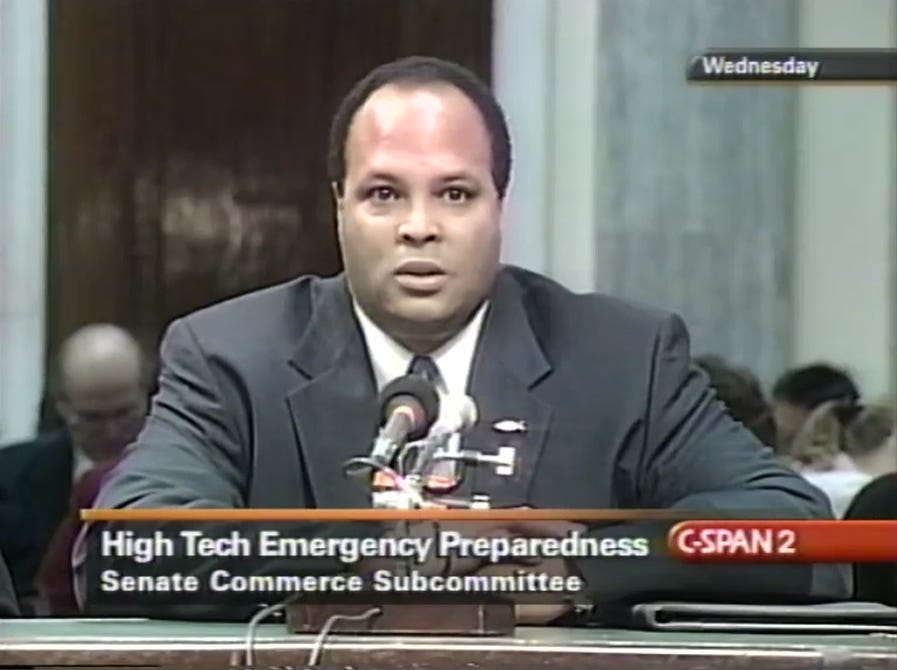
Conversations began around the possibility of merging the border security organizations, specifically the Immigration and Naturalization Service, which included the Border Patrol; the Coast Guard, then under the Department of Transportation; and the Customs Service, at the time led by the Department of the Treasury, into a single entity. This was not dissimilar to the Thornberry bill, which included the Federal Emergency Management Agency (FEMA) for emergency preparedness and response. By the time these trial balloons were being floated around Washington, I had been an assistant director and chief information officer at FEMA for nearly six months and had already testified on Capitol Hill about first-responder communications interoperability problems at Ground Zero on 9/11.
These trial balloons were met with resistance from the agencies in question, and I learned a few things about Washington in the process. President Bush had committed to breaking down the silos in which various government functions resided, and he sought to merge functions by portfolio, which cut across multiple federal agencies. My portfolios were disaster management and emergency communications, and there was a lot of duplication of effort across agencies in these disciplines that could be eliminated through collaboration and cooperation.
However, I learned that agencies are parochial and don’t necessarily work well together, if at all. In addition, the congressional committees and individual members of Congress who funded these agencies believed they had a stake in decisions affecting them, so they were quick to weigh in when major changes were proposed.
It would have been easy to blame the lack of cooperation on career civil servants at these agencies, and they bore some responsibility. Still, one would be surprised by how quickly political appointees to these agencies assimilated into the cultures into which they were placed, and I was amazed to see them push back against the White House, even though they served at the President's pleasure.
While high-level political appointees often move on to well-paying jobs as pundits, media personalities, consultants, or senior executives once the administration’s term is concluded, many low-level appointees take on career civil service positions with the agencies to which they were appointed, a phenomenon known in Washington as “burrowing.” It’s this practice that led to the conspiracy theory of the “deep state,” suggesting a nefarious, long-term plot to create a permanent left-leaning bureaucracy with no accountability to the people.
The truth is more boring than that: the job security and benefits are very attractive, the knowledge and experience they’ve gained at their agency make them valuable employees, and, as I implied earlier, not everyone leaves the government and gets rich. Many of them strongly believe in public service and choose to make it their life’s work. And yes, burrowing is a bipartisan practice. Of course, the truth is not nearly as motivating to an electorate looking for scapegoats as a cabal of communists who have infiltrated our government and are working in concert to undermine conservative patriots every time they win the White House.
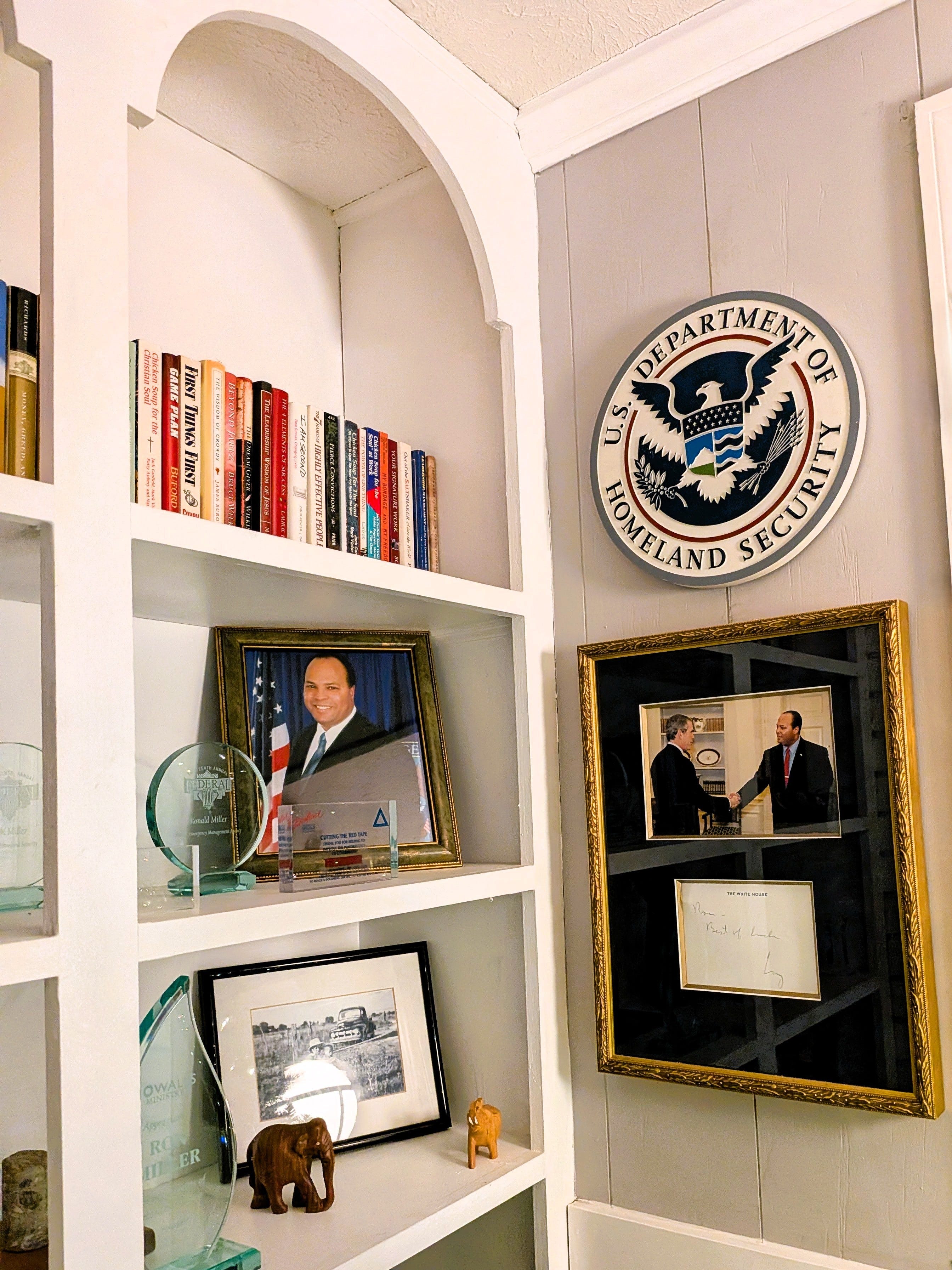
Of course, we all know that DHS eventually came to be, and I’ve shared before that I was intimately involved in the operational planning for the new department and served as a charter member of the organization. After I left federal service to return to the private sector, I continued to work for DHS as a contractor, supporting their intelligence, infrastructure protection, and cybersecurity offices.
My reason for bringing up some of the initial resistance to the idea was twofold. I didn’t mention it specifically, but not everyone was keen on bringing multiple intelligence, national security, and law enforcement organizations under a single umbrella. Initially, conservatives, including President Bush, opposed the idea. It was only after it became clear that the agencies were not poised to work together, and after public and political pressure mounted for a more robust government response to the terrorist threat, that the plan to establish DHS took shape.
The American Civil Liberties Union spoke for many when they said the design for DHS was “constitutionally bankrupt” because it lacked sufficient privacy and civil rights protections:
“Homeland security is too important an issue to be handled so recklessly. A department so large must have robust oversight and proper civil rights and privacy protections. Without these, what’s to stop the Department from abusing the very citizens it is responsible for protecting?” ~ Timothy Edgar, ACLU Legislative Counsel
It’s sobering to read those words in the light of today’s events. This speaks to the central reason DHS might have been a bad idea. But before I get to that, I want to point out another observation I made at the time: the clash of cultures. I’d seen it at FEMA: some saw FEMA’s role through the lens of national security, while others saw it as a vital service to citizens in their hour of greatest need after a major disaster. That created tension inside the organization as the two cultures competed for resources and priorities.
Likewise, some in Congress were critical of the culture clash at what was then the Immigration and Naturalization Service (INS). INS combined immigration services and enforcement under the same roof, and some members of Congress believed that INS employees saw themselves as “social workers” and that a customer-service mindset, as opposed to an enforcement one, had overtaken the entire organization, including the Border Patrol, which, as its name implies, was responsible for border protection. With the creation of DHS, INS was abolished, and its functions were divided into three new agencies: U.S. Citizenship and Immigration Services, Immigration and Customs Enforcement (ICE), and Customs and Border Protection (CBP). Nevertheless, there were always tensions between DHS employees who saw their jobs as serving immigrants rather than arresting and deporting them. The evidence of our eyes makes it clear who won out.
So was DHS a bad idea? Hindsight is always 20/20, but it’s important for future policymakers and the public to learn from history and not repeat it. DHS was born in an atmosphere of urgency and, perhaps, fear. The U.S. had been in a state of relative slumber since the end of the Cold War. The Clinton administration presided over a prosperous and peaceful nation, and only his personal failings overshadowed his governance, paving the way for George W. Bush to become president. 9/11 was a seismic jolt to the nation’s well-being, and Americans feared that another attack was imminent. Liberties and rights took a back seat to security and safety, even though we were certain we would never employ the resources of the third-largest cabinet department and the nation’s largest law enforcement agency against the people the department was created to serve. If we did, we believed we would be held accountable, and that the rule of law would protect the people as it was designed to do.
We never envisioned a chief executive who:
Sees the government as a tool to reward friends, punish enemies, and enrich himself.
Employs the Department of Justice, federal law enforcement, and the U.S. armed forces as his personal attorneys, private police, and personal enforcers.
Considers fellow Americans the greatest threat to the nation’s well-being, directs law enforcement and the military to act against citizens, and frequently criticizes the country he aimed to lead, claiming only he can fix it.
Harbors a deep animus toward non-white immigrants and believes they detract from American greatness.
Dismisses the Constitution and the rule of law unless it grants him the authority to do as he wishes or supports his point of view, and dismantles independent watchdogs and non-partisan accountability agencies so he can rule with impunity.
Disrespects the other branches of government to the point where Congress has essentially prostrated itself at his feet, and a compliant Supreme Court, which subscribes to the unitary executive theory and embraces a powerful executive, granted him immunity from prosecution for essentially any actions committed while he is president, and quashes attempts by the lower courts to constrain him.
Creates and lives in an alternative reality where only his version of events is true, and only his morality matters.
In effect, DHS is like a weapon; when placed in the wrong hands, it can be deadly. Would we have paused the rush to create DHS if we had a crystal ball and looked ahead to Donald Trump? We will never know the answer. However, one of our founders saw someone like Donald Trump coming, even if we didn’t:
When a man unprincipled in private life desperate in his fortune, bold in his temper, possessed of considerable talents, having the advantage of military habits—despotic in his ordinary demeanour—known to have scoffed in private at the principles of liberty—when such a man is seen to mount the hobby horse of popularity—to join in the cry of danger to liberty—to take every opportunity of embarrassing the General Government & bringing it under suspicion—to flatter and fall in with all the non sense of the zealots of the day—It may justly be suspected that his object is to throw things into confusion that he may “ride the storm and direct the whirlwind.” ~ Alexander Hamilton, Enclosure: [Objections and Answers Respecting the Administration], [18 August 1792]
Hamilton goes on to describe two people from Roman history, Cato and Caesar, as examples of leaders who pose the greatest threats to a republic, declaring, “No popular Government was ever without its Catalines & its Cæsars. These are its true enemies.” Before his declaration, he explained that “The former frequently resisted—the latter always flattered the follies of the people. Yet the former perished with the Republic the latter destroyed it.” Taking him at his word, you can conclude which path he might envision for us today.
Regarding one of the points I made about not conceiving a man like Donald Trump coming to power, I am dismayed by the genuine contempt he has for most Americans. That makes it easy for him to deploy his masked paramilitary police to American cities to wreak havoc and spread fear. I am struck by the fact that he is willing to commit the United States to a dangerous military conflict in Iran over the right of its people to protest their government, but threatens to invoke the Insurrection Act so he can send troops to quell protests here at home. I would ask someone to make it make sense, but that would be an impossible task.
American Christians are divided on the government’s tactics regarding its mass deportation efforts, and we could have a spirited debate on how to apply in our present times the Bible’s commands in both the Old and New Testaments to treat the foreigners among us. I don’t want to get sidetracked here, but I have two points I'm completely confident in.
I would argue that it is entirely possible to conduct immigration policy while still respecting the rule of law and the rights and dignity of human beings. President Obama did it, deporting more than 3.1 million people, more than any U.S. president in history, including President Trump in his first term. Since President Trump claims to be smarter than practically anyone else who has occupied the Oval Office, he can do it, too.
I would also argue that deporting people who pose a documented danger to American citizens is the stated objective of this administration, but not its real one. President Obama did that, primarily targeting non-citizens who had committed serious crimes. Trump’s roving bands of masked, armed men are grabbing people indiscriminately out of their vehicles; pulling up on people outdoors and demanding proof of citizenship from anyone who isn’t white; raiding schools, shopping areas, farms, convenience stores, and other places where they believe immigrants work or congregate; breaking into people’s homes without warrants; and seizing people at courthouses who are following the law and seeking legal residency. Public statements by the President, his “immigration whisperer,” Stephen Miller, and opinion-shapers throughout the President’s sphere of influence have made it clear that he wants to rid the United States of third-world immigrants by removing as many of them as possible and denying entry to others so the country’s culture can “heal.” Neither he nor his supporters have been explicit about exactly what we need to “heal” from, but I don’t think the sickness resides in our non-white immigrant population.
If I were to engage in a spirited debate with other Christians on the topic of immigration, I am certain I can defend those two points with empirical evidence that they would have considerable difficulty refuting. However, that’s a rabbit hole I don’t want to travel down right now.
In my continued quest to “think Christianly” about all things, I want to focus on what my obligations are to obey the government of the nation in which the Lord has placed me.
“Conservative” Christians (a phrase I despise as much as “progressive” Christians because there is only one kind of Christian - the Christ-following kind) believe that we owe our total allegiance to the ruling authorities, pointing to Paul’s words in Romans 13:1-7 and Peter’s in 1 Peter 2:13-17. When the Jewish religious and secular leaders tried to trap him with a question about paying taxes, Jesus Himself said to them, “So give back to Caesar what is Caesar’s, and to God what is God’s” (Matthew 22:21).
Yet, when Peter, the same one who wrote, “Be subject for the Lord’s sake to every human institution” (1 Peter 2:13), and the other apostles were ordered by the Sanhedrin not to teach in the name of Jesus, “Peter and the other apostles replied: ‘We must obey God rather than human beings!’” (Acts 5:29), angering the authorities, who wanted to put them to death until Gamaliel, a respected elder and teacher among them, said to let them go to rise or fall on whether or not they are truly of God. They were all flogged, ordered not to speak in the name of Jesus, then released. Their reaction is instructive:
The apostles left the Sanhedrin, rejoicing because they had been counted worthy of suffering disgrace for the Name. Day after day, in the temple courts and from house to house, they never stopped teaching and proclaiming the good news that Jesus is the Messiah. (Acts 5:41-42)
Taking the words and actions of Jesus and the apostles on how Christians should respond to authority in their full context, these are my takeaways:
Be the best citizen you can be (1 Peter 2:12). As a Christian, you are always being observed, so don’t give anyone a reason to challenge or dismiss you. Pay your taxes, follow the rules, show respect to those in authority, even if you didn’t choose them. I think we all have some work to do there, especially me. It’s tough to watch those in power abuse those without it, and still respect them.
If a government edict compromises your ability to teach the Gospel or make disciples (Matthew 28:18), or if it compels you to hate God or your neighbor (Matthew 22:36-40), you must obey God. Just be sure it is of God, not your own whims. Humans often have a troubling habit of attributing their own preferences to the will of God.
You must submit peacefully and willingly to the consequences of choosing to obey God over men, accepting the penalty without complaint (1 Peter 2:19, 21-23). This is tough for Americans, since rebellion is part of their cultural DNA.
Rejoice in your imitation of Christ (Matthew 16:24), who came in peace, chose obedience to God over men, suffered silently, and went willingly to the cross, yet rose in glory with all authority in heaven and on earth granted to Him.
We tend to overcomplicate the Christian life, but it’s really simple: “Be like Jesus.” Not the Jesus your pastor, family member, friends, or politicians tell you about, but the One that’s actually in the Bible. Learn how He lived and what He taught, and what His disciples who learned directly from Him taught the world. That’s what I would call a good idea.